Northeast Brazil learned to speak Spanish. Has your website?
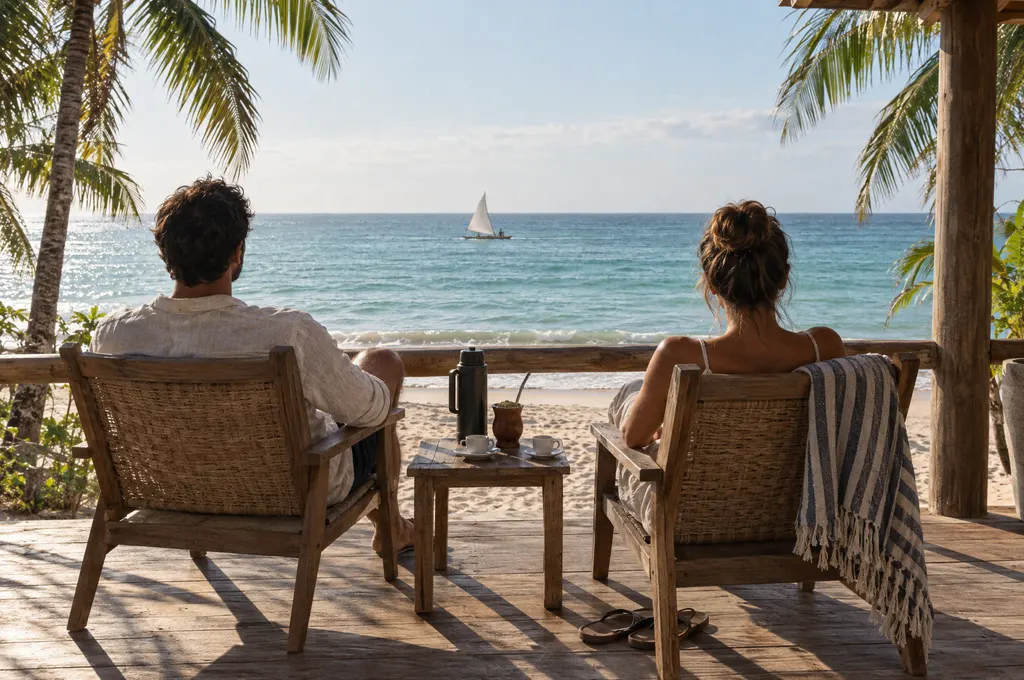
Illustrative image created with AI.
Northeast Brazil drew 66% more foreign visitors in early 2026, over half from Argentina. Why machine translation won't sell a high-end stay.
By Laura Urias · fieli studio
In 30 seconds
- Northeast Brazil has never welcomed so many foreign visitors: 212,400 in the first quarter of 2026, up 66% from a year earlier. More than half of them, 109,600, came from Argentina, twice as many as the year before.
- International routes into the region grew from 18 in 2023 to 42 in 2026. In the state of Alagoas, foreign arrivals more than doubled, and starting in December, 11 flights a day will arrive from Buenos Aires.
- The opportunity is on your website: 76% of consumers prefer to buy when information is in their own language. Spanish written for the reader, not run through a machine, is what turns that demand into direct bookings.
Northeast Brazil has never welcomed so many foreign visitors
Between January and March 2026, 212,400 foreign travelers landed in Northeast Brazil on international flights, up 66% from the same period a year earlier. Across Brazil as a whole, growth was 19%. The figures come from Embratur, Brazil’s tourism board, using Federal Police data, and were released by the Ministry of Ports and Airports.1
And most of them speak Spanish. Argentines accounted for 109,600 arrivals, more than half the total, and their number doubled in a year. Portugal, Uruguay, France and Italy followed.1
The skies opened up
This is no accident. International routes linking the Northeast to the rest of the world grew from 18 in 2023 to 42 in 2026. Over the same period, annual international flights rose from 2,430 to 5,390, and seats from 604,900 to 1.18 million.2 Fortaleza, João Pessoa, Maceió, Natal, Porto Seguro, Recife and Salvador now all have regular international service.
Alagoas shows the scale of the change
The state of Alagoas is a case in point. Between January and April 2026, Maceió airport welcomed 18,458 foreign tourists, compared with 8,846 over the same period in 2025: a 108% increase. Argentines lead the way.3
And more is coming. Starting December 3, Alagoas will have 11 daily flights from Buenos Aires, operated by JetSmart, Latam and Gol, and direct seats on the route will grow from 20,000 to 30,000, according to the state’s Tourism Secretariat.4
What these travelers find when they look for a place to stay
They plan the trip on their phones, in Spanish. They search Google, ask an AI assistant, compare photos, read reviews. And time after time they land on websites that exist only in Portuguese, or that offer an automatic translation button tucked into a corner.
In a CSA Research survey of 8,709 consumers in 29 countries, 76% said they prefer to buy when information is in their own language, and 40% said they never buy from websites in another language.5 The survey covers shopping in general, not just travel, but the logic holds even more strongly when what you’re buying is an experience: no one pictures themselves in a place they can’t understand.
Machine translation doesn’t sell high-end hospitality
Machine translation has improved enormously, and it’s fine for reading a menu. Selling a stay is something else. A high-end guesthouse sells desire, and desire lives in the details: the tone, the right word, the reference that resonates with the reader.
To an Argentine, a pool is a pileta. A translated page says piscina: not wrong, but it sounds like it was written for someone else. And a line that feels graceful in Portuguese can come out stiff or odd in Spanish. The guest can’t say why, but they sense the place wasn’t made with them in mind.
There’s a technical side, too. The browser’s translate button only appears for people already on your website; it doesn’t create Spanish pages that Google and AI assistants can show to people searching in Spanish. Google recommends a separate URL for each language and says it determines a page’s language from its visible content.6 And Google’s own policies treat pages mass-produced through automated translation, with no added value for readers, as spam.7

Writing for the reader
What works is transcreation: rewriting the website for the people who will read it, while keeping the place’s identity. In practice, that means writing in Spanish from the meaning, not from the Portuguese text, with the words Argentines really say, answers to the questions only foreign guests ask, and the same care the guesthouse puts into its front desk.
You don’t need to invent a different guesthouse for Argentine guests. Tapioca is still tapioca; the sunset is the same sunset. What changes is that, for the first time, they understand why they should choose this place.
A website that welcomes guests in Spanish, in practice
A hypothetical example: a ten-room guesthouse on the north coast of Alagoas, an hour and a half from Maceió.
Today, its website is in Portuguese, with a row of little flags in the corner. A guest from Buenos Aires clicks one, reads a correct but cold translation, can’t find out how to get there from the airport, and books through the platform they already know, which takes a commission on every night.
On a website that welcomes guests in Spanish, they arrive from a search in Spanish and find a page written for them: the pileta, a breakfast with the best of the region, the airport transfer, payment by foreign card, someone who speaks Spanish on WhatsApp. The booking happens right there, in Spanish from start to finish.
What changes for the business
We don’t promise numbers before we know the place. But the data above shows where the opportunity lies.
- Direct bookings, no commission. Guests who understand your website book on it instead of going through a third-party platform.
- Being found by people searching in Spanish. Your own Spanish pages appear in searches and AI answers in that language.
- Less friction in guest service. Arrival and payment questions answered on the website mean fewer messages and less back-and-forth.
- Guests who come back and recommend you. Someone who felt welcome from the first click tells their friends, in their own language.
5 steps to a website that welcomes guests in Spanish
Start with what matters most when a guest decides to book. Each step comes with a one-minute check.
A real Spanish version, at its own URL.
Spanish pages at their own URL (for example, /es/) can be found on Google and by AI assistants when people search in Spanish. A button that translates the page on the fly doesn't create those pages.
How to check Search Google in Spanish for your property's name plus the word posada. Does one of your Spanish pages come up?
Rewrite for the reader instead of translating word for word.
An Argentine guest says pileta, not piscina, for the pool. Copy written for them reads like an invitation; a literal translation reads like an instruction manual.
How to check Ask a Spanish speaker to read the first screen of your website out loud. Does it sound like it was written for them?
Answer the questions only foreign guests ask.
Distance from the airport, how to get there, whether foreign cards are accepted, whether someone at the front desk speaks Spanish. Answering these up front saves messages and builds trust.
How to check Count how many arrival and payment questions your Spanish pages answer.
Booking and payment in Spanish, start to finish.
A Spanish landing page counts for little if the booking engine, the confirmation or the email slips back into Portuguese partway through.
How to check Make a test booking in Spanish and note the step where the language switches.
Reply in the guest's language.
Guests who read your website in Spanish will message you in Spanish on WhatsApp. A ready-made welcome message and quick replies in their language are what close the booking.
How to check Send a message in Spanish to your own WhatsApp and time the reply.
Frequently asked questions
Isn't the browser's automatic translation enough?
It's enough to understand a page, not to sell a stay. Automatic translation only appears for people already on your website, doesn't create pages Google can show in Spanish searches, and misses the tone: the copy is correct, but it makes no one want to go. Google's own policies treat pages mass-produced through automated translation, with no added value for readers, as spam.
Is translating the homepage enough?
It's a start, but the decision is made on the room pages, the getting-here page and in the booking flow. If a guest starts in Spanish and ends up in Portuguese, trust drops right where it matters most.
Which Spanish should I use?
Neutral Latin American Spanish works well for Argentine, Uruguayan and Chilean guests. A few River Plate words, like pileta, make a difference when most of your guests come from Argentina.
Does this help with Google and AI assistants?
It does. Google recommends a separate URL for each language and uses a page's visible content to tell what language it's in. Well-written Spanish pages show up for people searching in Spanish, including in AI answers.
Is it worth it for a small guesthouse?
It's worth looking at the numbers for your region. In Alagoas, foreign arrivals more than doubled from January to April 2026, and most of those visitors were Argentine. When the guest is already on the plane, the question is whether they'll book directly with you or through a platform.
Sources
- Brazil's Ministry of Ports and Airports — Northeast records 66% rise in international air arrivals (Embratur and Federal Police data) (May 2026)
- Panrotas — Northeast grows 66% in international air arrivals in Q1 2026 (May 28, 2026)
- Panrotas — Alagoas posts 108% rise in international tourist arrivals in 2026 (May 28, 2026)
- Brasilturis — Alagoas to have 11 daily flights from Buenos Aires in the summer season (October 2, 2026)
- CSA Research — Can't Read, Won't Buy: B2C (survey of 8,709 consumers in 29 countries) (July 2020)
- Google Search Central — Managing multi-regional and multilingual sites (December 10, 2025)
- Google Search Central — Spam policies: scaled content abuse (August 28, 2026)
Updated .
How we made this note: AI-assisted research, every source opened and checked, writing and review by fieli studio.